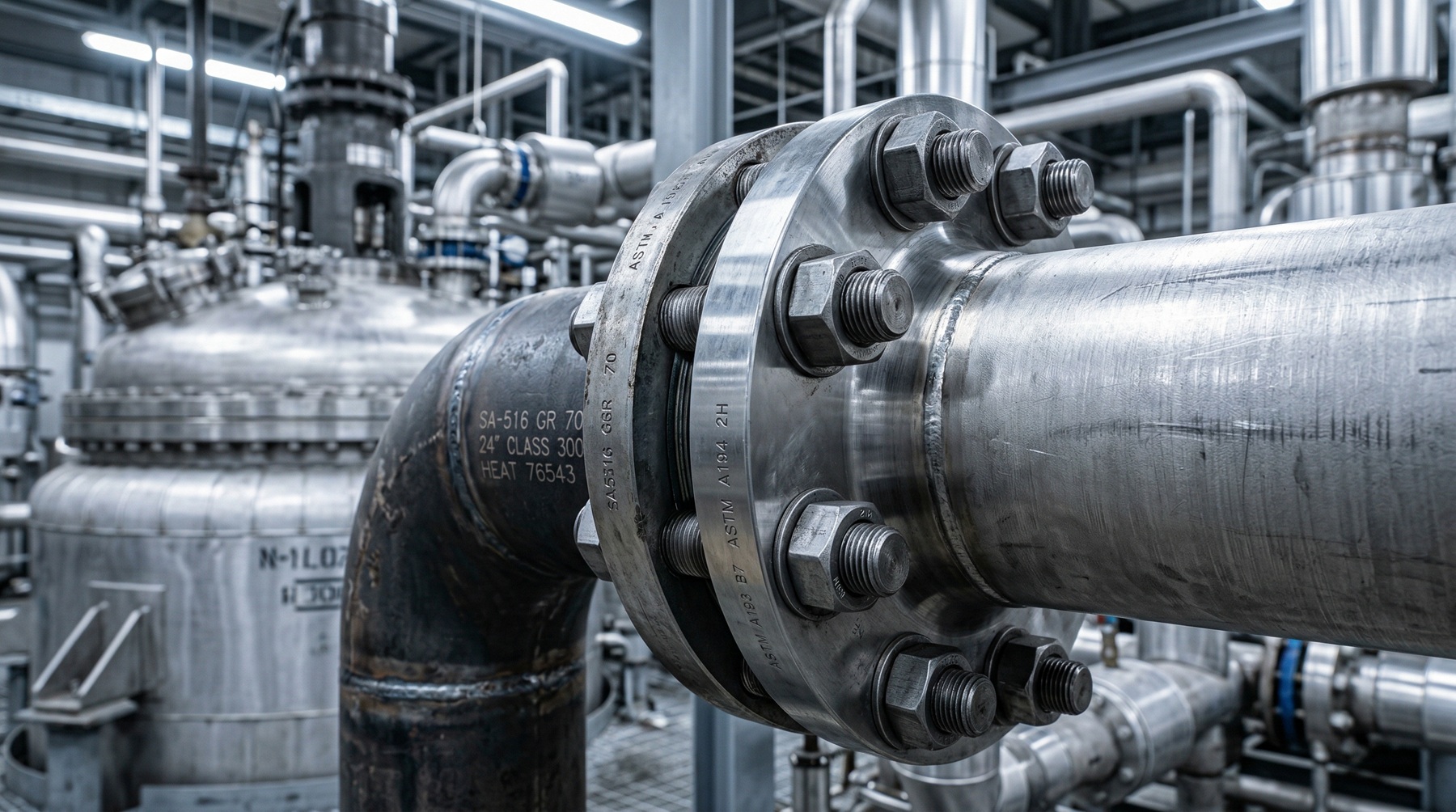
Built for petrochemical, power, pressure vessel and manufacturing industries, the Scensor handheld XRF delivers fast, non-destructive positive material identification (PMI) and material reliability verification β confirming alloy grade and key element content right on site.
In high-safety industries such as petrochemical, power and pressure vessels, material mix-ups can cause serious accidents. Handheld XRF PMI testing requires no cutting, grinding or lab submission β spot-test directly on pipes, valves, welds and components, confirming alloy grade and Cr, Ni, Mo content in seconds.
Verify pipeline, pressure vessel and weld materials to prevent grade mix-ups.
Confirm alloy composition of high-temperature, high-pressure components.
Incoming inspection, line sorting and finished-goods grade consistency.
Rapid on-site material checks for installation, turnaround and audits.
| Detector | Large-area silicon drift detector (SDD) for speed and light elements |
| X-ray tube | Up to 40β50 kV miniature X-ray tube optimized for alloys |
| Elements | MgβU, including Cr, Ni, Mo, Mn, Cu, Ti |
| Analysis time | 1β3 s for routine grade ID |
| Grade library | Built-in, expandable alloy grade library with custom grades and methods |
It identifies elements via their characteristic X-ray fingerprint and, combined with an alloy grade library, delivers non-destructive grade identification in seconds β accurately measuring Cr, Ni, Mo and other key elements for on-site PMI and material reliability verification.
No. Handheld XRF is fully non-destructive β no cutting, grinding or sampling. Spot-test directly on pipes, valves, welds and components, ideal for in-service equipment and finished goods.
Routine grade identification typically returns results in 1β3 seconds; precise trace and light-element analysis can be extended to tens of seconds.
Contact the Scensor team for handheld XRF PMI configuration advice and pricing for your industry.